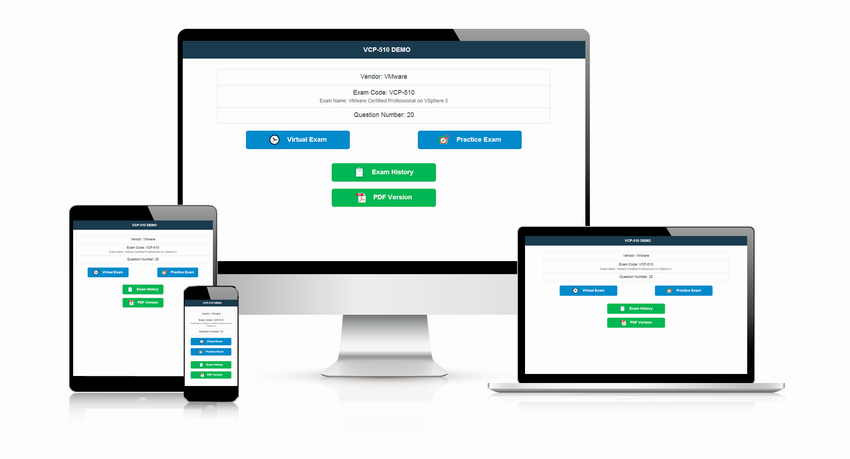
Simulation is not a luxury; it is reconnaissance. The ExamCost Desktop Test Engine for the ISO-IEC-27001-Lead-Auditor exam recreates the timed environment, so by exam day the format feels familiar rather than foreign.
PECB ISO-IEC-27001-Lead-Auditor Exam Syllabus Topics:
| Section | Weight | Objectives |
|---|---|---|
| Auditing Principles and Practices | 30% | - Audit reporting and follow-up
|
| Requirements of ISO/IEC 27001:2022 | 30% | - Leadership and planning
|
| Information Security Controls (ISO/IEC 27002:2022) | 25% | - Control categories and implementation guidance
|
| Fundamental Concepts of Information Security | 15% | - Overview of ISO/IEC 27000 family of standards
|
ISO-IEC-27001-Lead-Auditor Exam FAQ — Stay Current, Start Fast, Simulate Real
Three versions of the same study materials: a printable, expert-prepared PDF with free demo download and instant access; a Desktop Test Engine for Windows with customizable simulation and timed modes that works offline; and an Online Test Engine for any browser on Windows, Mac, Android, and iOS with test history and performance review. All 418 practice questions are identical across versions. Every purchase includes 365 days of free updates, a 50% renewal discount afterward, and unlimited computer installations.
The PECB Certified ISO/IEC 27001 Lead Auditor exam contains 60 to complete within 120 minutes. Timed simulation in the ExamCost Desktop Test Engine teaches that rhythm before exam day does.
The official PECB Certified ISO/IEC 27001 Lead Auditor outline defines 4 domains. The leading three are Auditing Principles and Practices (30%), Requirements of ISO/IEC 27001:2022 (30%), and Information Security Controls (ISO/IEC 27002:2022) (25%). The full list is in the topics section above, and ExamCost's 418 practice questions cover each one.
Completion of PECB-certified ISO/IEC 27001 Lead Auditor training course; recommended prior knowledge of information security management systems and audit principles Since requirements change over time, confirm the latest on the official PECB exam page before scheduling.
The PECB Certified ISO/IEC 27001 Lead Auditor exam requires 70% to pass, and registration costs $450 USD. A failed attempt means paying the same fee again — a readiness check with the ExamCost engines before booking is the cheaper option.
The ISO-IEC-27001-Lead-Auditor exam is a PECB certification exam validating the PECB Certified ISO/IEC 27001 Lead Auditor syllabus shown above. It belongs to these credential paths: PECB Certified ISO/IEC 27001 Foundation, PECB Certified ISO/IEC 27001 Lead Implementer. Candidates in 2026 start with ExamCost's 418 practice questions, available as a printable PDF, a Windows Desktop Test Engine, and an Online Test Engine — three versions of the same materials.
PECB recommends these training resources for the PECB Certified ISO/IEC 27001 Lead Auditor exam:
Follow the training with steady self-testing — the 418 practice questions from ExamCost help you apply theory and fill any gaps the training leaves.
ExamCost issues a full refund if you take the PECB Certified ISO/IEC 27001 Lead Auditor exam within 60 days of purchase and do not pass. The policy does not apply if the exam is taken within 3 days of purchase, if the exam was never actually taken, or to free materials or expired orders, and the candidate name must match the payer name. Submit a scan of your enrollment slip and the official Score Report PDF within 2 days of the exam; claims are processed within 7 days. Alternatively, exchange for two free exam products of equal value and keep your original update service. Orders arrive by email within 1 minute — contact support if nothing arrives within 2 hours.
Online proctored or onsite at authorized exam centers Register for the PECB Certified ISO/IEC 27001 Lead Auditor exam through these official channels:
After booking, ExamCost delivers your practice questions within 1 minute — preparation starts the same day.
PECB Certified ISO/IEC 27001 Lead Auditor Sample Questions:
Which one option best describes the purpose of retaining documented information related to the Information Security Management System (ISMS) of an organisation?
- A. To show compliance with legal requirements.
- B. To the extent necessary, to have confidence that the processes have been carried out as planned.
- C. To show objective evidence to third-party auditors.
- D. To ensure that all workers will follow the established procedure.
Correct Answer: B 🗳️
Explanation: Only visible for ExamCost members. You can sign-up / login (it's free).
Which three of the following options are an advantage of using a sampling plan for the audit?
- A. Overrules the auditor's instincts
- B. Gives confidence in the audit results
- C. Misses key issues
- D. Use of the plan for consecutive audits
- E. Provides a suitable understanding of the ISMS
- F. Implements the audit plan efficiently
Correct Answer: B,E,F 🗳️
Explanation: Only visible for ExamCost members. You can sign-up / login (it's free).
Scenario 4: Branding is a marketing company that works with some of the most famous companies in the US.
To reduce internal costs. Branding has outsourced the software development and IT helpdesk operations to Techvology for over two years. Techvology. equipped with the necessary expertise, manages Branding's software, network, and hardware needs. Branding has implemented an information security management system (ISMS) and is certified against ISO/IEC 27001, demonstrating its commitment to maintaining high standards of information security. It actively conducts audits on Techvology to ensure that the security of its outsourced operations complies with ISO/IEC 27001 certification requirements.
During the last audit. Branding's audit team defined the processes to be audited and the audit schedule. They adopted an evidence based approach, particularly in light of two information security incidents reported by Techvology in the past year The focus was on evaluating how these incidents were addressed and ensuring compliance with the terms of the outsourcing agreement The audit began with a comprehensive review of Techvology's methods for monitoring the quality of outsourced operations, assessing whether the services provided met Branding's expectations and agreed-upon standards The auditors also verified whether Techvology complied with the contractual requirements established between the two entities This involved thoroughly examining the terms and conditions in the outsourcing agreement to guarantee that all aspects, including information security measures, are being adhered to.
Furthermore, the audit included a critical evaluation of the governance processes Techvology uses to manage its outsourced operations and other organizations. This step is crucial for Branding to verify that proper controls and oversight mechanisms are in place to mitigate potential risks associated with the outsourcing arrangement.
The auditors conducted interviews with various levels of Techvology's personnel and analyzed the incident resolution records. In addition, Techvology provided the records that served as evidence that they conducted awareness sessions for the staff regarding incident management. Based on the information gathered, they predicted that both information security incidents were caused by incompetent personnel. Therefore, auditors requested to see the personnel files of the employees involved in the incidents to review evidence of their competence, such as relevant experience, certificates, and records of attended trainings.
Branding's auditors performed a critical evaluation of the validity of the evidence obtained and remained alert for evidence that could contradict or question the reliability of the documented information received. During the audit at Techvology, the auditors upheld this approach by critically assessing the incident resolution records and conducting thorough interviews with employees at different levels and functions. They did not merely take the word of Techvology's representatives for facts; instead, they sought concrete evidence to support the representatives' claims about the incident management processes.
Based on the scenario above, answer the following question:
Question:
Based on Scenario 4, what type of audit did Branding conduct?
- A. First-party audit
- B. Second-party audit
- C. Third-party audit
Correct Answer: B 🗳️
Explanation: Only visible for ExamCost members. You can sign-up / login (it's free).
Scenario 8: EsBank provides banking and financial solutions to the Estonian banking sector since September
2010. The company has a network of 30 branches with over 100 ATMs across the country.
Operating in a highly regulated industry, EsBank must comply with many laws and regulations regarding the security and privacy of data. They need to manage information security across their operations by implementing technical and nontechnical controls. EsBank decided to implement an ISMS based on ISO/IEC
27001 because it provided better security, more risk control, and compliance with key requirements of laws and regulations.
Nine months after the successful implementation of the ISMS, EsBank decided to pursue certification of their ISMS by an independent certification body against ISO/IEC 27001 .The certification audit included all of EsBank's systems, processes, and technologies.
The stage 1 and stage 2 audits were conducted jointly and several nonconformities were detected. The first nonconformity was related to EsBank's labeling of information. The company had an information classification scheme but there was no information labeling procedure. As a result, documents requiring the same level of protection would be labeled differently (sometimes as confidential, other times sensitive).
Considering that all the documents were also stored electronically, the nonconformity also impacted media handling. The audit team used sampling and concluded that 50 of 200 removable media stored sensitive information mistakenly classified as confidential. According to the information classification scheme, confidential information is allowed to be stored in removable media, whereas storing sensitive information is strictly prohibited. This marked the other nonconformity.
They drafted the nonconformity report and discussed the audit conclusions with EsBank's representatives, who agreed to submit an action plan for the detected nonconformities within two months.
EsBank accepted the audit team leader's proposed solution. They resolved the nonconformities by drafting a procedure for information labeling based on the classification scheme for both physical and electronic formats. The removable media procedure was also updated based on this procedure.
Two weeks after the audit completion, EsBank submitted a general action plan. There, they addressed the detected nonconformities and the corrective actions taken, but did not include any details on systems, controls, or operations impacted. The audit team evaluated the action plan and concluded that it would resolve the nonconformities. Yet, EsBank received an unfavorable recommendation for certification.
Based on the scenario above, answer the following question:
Based on scenario 8, EsBank submitted a general action plan. Is this acceptable?
- A. No, a general action plan does not enable the correction of nonconformities
- B. Yes, nonconformities with the same root cause should have a general action plan
- C. No, an action plan should only address one nonconformity
Correct Answer: A 🗳️
Explanation: Only visible for ExamCost members. You can sign-up / login (it's free).
You are an experienced audit team leader guiding an auditor in training.
Your team is currently conducting a third-party surveillance audit of an organisation that stores data on behalf of external clients. The auditor in training has been tasked with reviewing the ORGANISATIONAL controls listed in the Statement of Applicability (SoA) and implemented at the site.
Select four controls from the following that would you expect the auditor in training to review.
- A. The operation of the site CCTV and door control systems
- B. How information security has been addressed within supplier agreements
- C. How power and data cables enter the building
- D. Rules for transferring information within the organisation and to other organisations
- E. Confidentiality and nondisclosure agreements
- F. The organisation's business continuity arrangements
- G. Access to and from the loading bay
- H. The development and maintenance of an information asset inventory
Correct Answer: B,D,E,H 🗳️
Explanation: Only visible for ExamCost members. You can sign-up / login (it's free).
Viewing page 1 out of 84 pages.
Viewing questions 1-5 out of 418 questions.