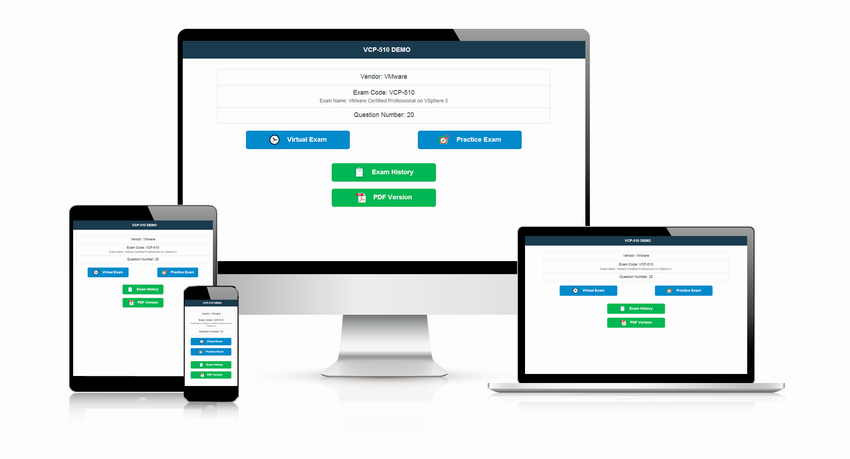
Whether you study best on paper or on screen, ExamCost has a Pegasystems Certified Senior System Architect (CSSA) 72V1 format that fits: a printable PDF, a desktop test engine for Windows, and an online test engine that runs in any browser. All three cover the same PEGACSSA72V1 practice questions.
Pegasystems PEGACSSA72V1 Exam Syllabus Topics:
| Section | Weight | Objectives |
|---|---|---|
| Topic 1: Data and Integration | 20% | - Data Management
|
| Topic 2: Case Management | 20% | - Case Processing
|
| Topic 3: Performance and Debugging | 10% | - System Optimization
|
| Topic 4: Application Design and Construction | 25% | - Application Structure
|
| Topic 5: User Experience | 10% | - UI Development
|
| Topic 6: Reporting | 5% | - Reporting Features
|
| Topic 7: Security | 10% | - Application Security
|
Pegasystems Certified Senior System Architect (CSSA) 72V1 Exam FAQs and Straight Answers
The PEGACSSA72V1 exam, officially titled Certified Senior System Architect (CSSA) 72V1, is the qualifying test for the CSSA certification from Pegasystems, a credential at the Professional level. Passing it proves you have the skills employers look for in certified professionals, and it can also support progress toward related credentials such as Certified System Architect (CSA) 72V1.
The Pegasystems Certified Senior System Architect (CSSA) 72V1 exam gives you 90 minutes to work through 60 questions. That is a steady pace with little room for second-guessing, so train yourself to read each question once, flag the difficult ones, and keep moving. Before exam day, sit at least two full timed sessions in the ExamCost test engine — when the clock feels familiar, it stops being a threat.
You need 70% to pass, and the official registration fee is USD 175. Fall short and you pay that fee in full again for every retake, which makes solid preparation the cheaper option by far. Work through the ExamCost practice questions until you score comfortably above the passing mark, then book your seat.
Certified System Architect (CSA) certification is required. Eligibility rules can change over time, so before you register, confirm the latest requirements on the official exam page: Pegasystems PEGACSSA72V1 exam overview.
Yes. ExamCost offers a free PDF demo for the Pegasystems Certified Senior System Architect (CSSA) 72V1 exam so you can judge the quality of our questions and answers before paying anything. Every purchase also comes with 365 days of free updates, and once that period expires you can extend your update service at a 50% discount.
Your purchase is protected by a 100% money-back guarantee. If you sit the corresponding PEGACSSA72V1 exam within 60 days of buying and do not pass, send us a scan of your exam enrollment slip together with your official Score Report (PDF) within 2 days of the exam date — the candidate name must match the payer's name — and we will process your full refund within 7 days. Please note that exams taken within 3 days of purchase, materials downloaded without ever sitting the exam, free products, and expired orders are not covered. If you would rather not have a refund, you can exchange your order for two exam products of equal value, free of charge, and keep the update service on your original purchase.
Delivery is instant: your files are emailed to you within one minute of payment and can also be downloaded directly, with no limit on the number of computers you install them on. If nothing has arrived within 2 hours, contact our customer service team and we will sort it out.
The Pegasystems Certified Senior System Architect (CSSA) 72V1 syllabus is organized into 7 domains. The main areas include Data and Integration (20%), User Experience (10%), and Reporting (5%). Scroll up to the Exam Topics section above for the complete, current outline before you plan your study schedule.
Pegasystems Certified Senior System Architect (CSSA) 72V1 Sample Questions:
In Pega Decision Management, which level of the proposition data model represents the purpose of the proposition?
- A. Business issue
- B. Strategy
- C. Proposition name
- D. Group
Correct Answer: B 🗳️
Users create Insurance Coverage Requests cases to authorize insurance payments. Users enter information that includes the name of the patient, the date of the procedure, and the type of procedure. After entering the information, users submit the request for a review of the patient's insurance policy. Because multiple users enter requests, duplicate requests can occur. A request is considered a duplicate if the patient name, procedure type, and procedure date match an existing request. You have been given two requirements:
*Ensure that users can identify duplicate requests.
*If a case is a duplicate, it is not written to the database. Otherwise, write the case to the database.
Which two steps satisfy the requirement that only nonduplicate requests are written to the database? (Choose Two)
- A. Add a Persist Case flow action to case lifecycle design
- B. Configure the case type to instantiate temporary cases.
- C. Configure a Create Case step to instantiate temporary cases.
- D. Add a Persist Case step to the case lifecycle design.
Correct Answer: A,B 🗳️
In which two situations do you use the PegaRULES Log Analyzer to analyze application performance?
(Choose Two)
- A. Before migrating an application to a testing system
- B. Throughout the application development life cycle
- C. During User Acceptance Testing
- D. After the application is deployed to a production system
Correct Answer: B,D 🗳️
An insurance claim case is field by a customer and assigned a claim type (fire, flood, or theft). The claim contains a list of loss items. Which of the data would you store in a local data source?
- A. Customer data
- B. Items of loss
- C. Policy details
- D. Claim types
Correct Answer: D 🗳️
A user is processing a case and receives an error message that the system could not find an appropriate rule to use. Select two possible reasons rule resolution failed to find a rule to execute. (Choose Two)
- A. The user does not have appropriate privilege to access the rule chosen by rule resolution.
- B. The availability of the rule chosen by rule resolution is set to Blocked.
- C. The context of the rule chosen by rule resolution does not match the context of the referencing rule.
- D. The rule chosen by rule resolution is in a ruleset that is not in the application's ruleset list.
Correct Answer: A,B 🗳️
Viewing page 1 out of 19 pages.
Viewing questions 1-5 out of 95 questions.