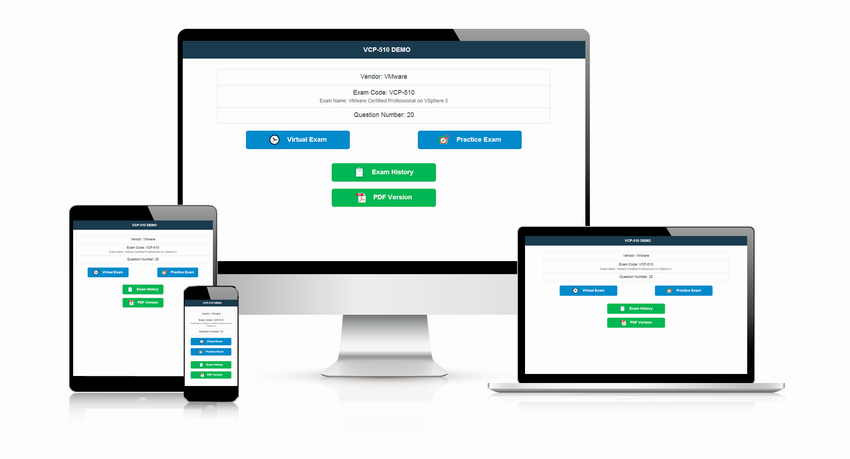
Why pay for study material sight unseen? ExamCost publishes a free CDIP demo so you can inspect the AHIMA Certified Documentation Integrity Practitioner questions, check the answer quality, and decide for yourself before a single dollar changes hands.
AHIMA CDIP Exam Syllabus Topics:
| Section | Weight | Objectives |
|---|---|---|
| Topic 1: Education and Leadership Development | 21–26% | - CDI project development and physician engagement - CDI program leadership and organizational collaboration - Provider education and interdisciplinary communication |
| Topic 2: Record Review and Document Clarification | 24–28% | - Provider query development and compliance - Post-discharge review and documentation validation - Clinical documentation review and gap identification |
| Topic 3: Clinical Coding Practice | 15–18% | - Diagnosis and procedure code assignment and sequencing - Coding fundamentals and guidelines application - DRG assignment and reimbursement concepts |
| Topic 4: Compliance | - Audit readiness and documentation integrity standards - Regulatory compliance and ethical documentation practices | |
| Topic 5: CDI Metrics and Statistics | - Performance metrics and reporting - Quality and outcome measurement (SOI/ROM) |
CDIP Exam FAQs: What Candidates Ask Before Booking
Registering for the CDIP exam costs USD 259 (AHIMA member), USD 329 (non-member) at the official rate, and you need 300 (scaled score) to pass. Bear in mind that an unsuccessful attempt is not discounted the second time around — a retake is charged at the full fee again. That is why experienced candidates test themselves with the 140 practice questions from ExamCost until their results are consistently strong before spending money on the real thing.
Yes, and we encourage it. A free PDF demo of the CDIP questions is available so you can evaluate the quality and layout before buying. After purchase, your material stays current with 365 days of free updates — and if that period ever expires, you can extend the update service at a 50% discount through your member zone.
Registration is handled through the vendor's official channels:
As for how you will sit it, the CDIP exam is offered Computer-based testing via Pearson VUE test centers or online proctored exam (OnVUE) — pick the option that fits your situation during booking.
You will face 140 (106 scored, 34 pretest) questions within a time allowance of 180 minutes. Raw numbers aside, the real skill is pacing: candidates who run out of time usually spent too long on early questions. Our advice is to set a mental per-question budget, skip and revisit anything that stalls you, and complete at least two full timed runs in the ExamCost test engine before the real appointment so the clock never rattles you.
Both situations are covered. Take the corresponding CDIP exam within 60 days of purchase without passing, and you may claim a full refund under our 100% Money Back Guarantee: submit a scanned exam enrollment slip plus the official Score Report PDF within 2 days of your exam date, and we finish processing within 7 days. The conditions are strict — an exam taken within 3 days of purchase does not qualify, the candidate's name must match the payer's, and free materials or expired orders are excluded. Would you rather keep studying? Swap the order for two other exam products of equal value free of charge while keeping updates on your original purchase. As for delivery, it is immediate: files unlock for download the moment payment clears, a copy reaches your mailbox within a minute, and there is no cap on how many computers you install it on — if 2 hours pass with nothing received, contact our support team.
Passing the CDIP exam earns you the Clinical Documentation Integrity Practitioner certification, a Professional-level credential. It is the vendor's official proof that your skills meet the standard employers look for, and it regularly appears as a requirement in job postings. The certification also relates to RHIA, RHIT, CCS, CCS-P, CHDA, so it can anchor a broader certification plan rather than stand alone.
One of the following: associate degree or higher; completion of CAHIIM-approved HIM certificate program; or hold RHIT, RHIA, CCS, or CCS-P credential. Recommended: 2 years CDI experience and medical terminology/anatomy/pathology/pharmacology knowledge. Because vendors revise their eligibility rules from time to time, treat this as a starting point and verify the latest requirements on the official exam page — see the official CDIP exam outline before you commit to a test date.
The vendor organizes the AHIMA Certified Documentation Integrity Practitioner blueprint into 5 domains, led by Clinical Coding Practice (15–18%), Record Review and Document Clarification (24–28%), Compliance. Every domain contains further subtopics, and the weighting tells you where your study hours pay off most — the full outline above has the complete picture, so review it before building your study plan.
The vendor recommends the following official courses for this exam:
Training builds knowledge, but it does not measure readiness. Once you finish a course, put yourself to the test with the CDIP practice questions from ExamCost — that is where you find out whether the material actually stuck.
AHIMA Certified Documentation Integrity Practitioner Sample Questions:
What is the term used when a patient is entered in the Master Patient Index (MPI) multiple times, in different ways, resulting in multiple medical record numbers?
- A. Facsimile
- B. Replica
- C. Clone
- D. Overlap
Correct Answer: D 🗳️
Explanation: Only visible for ExamCost members. You can sign-up / login (it's free).
Which of the following is a clinical documentation element supporting a transbronchial biopsy?
- A. Hemoptysis
- B. Length of procedure
- C. Pathology report documenting alveolar tissue
- D. Pathology report documenting bronchial tissue
Correct Answer: C 🗳️
Explanation: Only visible for ExamCost members. You can sign-up / login (it's free).
The facility has received a clinical validation denial for sepsis. The denial states sepsis is not a clinically valid diagnosis because it does not meet Sepsis-3 criteria. The facility has a policy stating it uses Sepsis-2 criteria.
What is the BEST next step?
- A. Have the contracting department work with payors to obtain agreement on how sepsis will be clinically validated.
- B. Appeal the denial because all payors must use the hospital's sepsis criteria when reviewing their claims.
- C. Remove sepsis from all claims where the diagnosis is not supported by sepsis 3 criteria.
- D. Query physicians when Sepsis-3 criteria is not met so they can provide additional documentation to support the diagnosis.
Correct Answer: A 🗳️
The provider was queried because the patient met clinical criteria for acute hypoxic respiratory failure. The response to the query was different than what was expected by the clinical documentation integrity practitioner (CDIP). What should the CDIP do?
- A. Record the query response as disagreed
- B. Implement the department's escalation process
- C. Have a different CDIP query the provider
- D. Revise the query and send it back to the provider
Correct Answer: B 🗳️
Explanation: Only visible for ExamCost members. You can sign-up / login (it's free).
The most beneficial step to identify post-discharge query opportunities that affect severity of illness, risk of mortality and case weight is to
- A. identify normal diagnostic test results that may indicate a possible addition of a secondary diagnosis
- B. watch for reportable conditions or conditions that are unambiguous or otherwise complete
- C. look for documented conditions that have well supported accompanying clinical criteria
- D. determine if only the treatment is documented and there is no diagnosis documented
Correct Answer: D 🗳️
Viewing page 1 out of 28 pages.
Viewing questions 1-5 out of 140 questions.