CompTIA CAS-002 : CompTIA Advanced Security Practitioner (CASP)

CAS-002 pass collection

Exam Code: CAS-002

Exam Name: CompTIA Advanced Security Practitioner (CASP)

Updated: May 31, 2026

Q & A: 465 Questions and Answers

Already choose to buy "PDF"
Price: $59.99 

About CompTIA CAS-002 Exam

CompTIA CAS-002 Exam Syllabus Topics:

TopicDetails
Enterprise Security 30%
Given a scenario, select appropriate cryptographic concepts and techniques.1. Techniques
  • Key stretching
  • Hashing
  • Code signing
  • Pseudorandom number generation
  • Perfect forward secrecy
  • Transport encryption
  • Data-at-rest encryption
  • Digital signature
2. Concepts
  • Entropy
  • Diffusion
  • Confusion
  • Non-repudiation
  • Confidentiality
  • Integrity
  • Chain of trust, root of trust
  • Cryptographic applications and proper/improper implementations
  • Advanced PKI concepts
  • Wild card
  • OCSP vs. CRL
  • Issuance to entities
  • Users
  • Systems
  • Applications
  • Key escrow
  • Steganography
  • Implications of cryptographic methods and design
  • Stream
  • Block
  • Modes
  • ECB
  • CBC
  • CFB
  • OFB
  • Known flaws/weaknesses
  • Strength vs. performance vs. feasibility to implement vs. interoperability
3.Implementations
  • DRM
  • Watermarking
  • GPG
  • SSL
  • SSH
  • S/MIME


Explain the security implications associated with enterprise storage.1.Storage type
  • Virtual storage
  • Cloud storage
  • Data warehousing
  • Data archiving
  • NAS
  • SAN
  • vSAN
2.Storage protocols
  • iSCSI
  • FCoE
  • NFS, CIFS
3.Secure storage management
  • Multipath
  • Snapshots
  • Deduplication
  • Dynamic disk pools
  • LUN masking/mapping
  • HBA allocation
  • Offsite or multisite replication
  • Encryption
  • Disk
  • Block
  • File
  • Record
  • Port

Given a scenario, analyze network and security components, concepts and architectures1.Advanced network design (wired/wireless)
  • Remote access
  • VPN
  • SSH
  • RDP
  • VNC
  • SSL
  • IPv6 and associated transitional technologies
  • Transport encryption
  • Network authentication methods
  • 802.1x
  • Mesh networks
2. Security devices
  • UTM
  • NIPS
  • NIDS
  • INE
  • SIEM
  • HSM
  • Placement of devices
  • Application and protocol aware technologies
  • WAF
  • NextGen firewalls
  • IPS
  • Passive vulnerability scanners
  • DAM
3. Virtual networking and security components
  • Switches
  • Firewalls
  • Wireless controllers
  • Routers
  • Proxies
4. Complex network security solutions for data flow
  • SSL inspection
  • Network flow data
5. Secure configuration and baselining of networking and security components
  • ACLs
  • Change monitoring
  • Configuration lockdown
  • Availability controls
6.Software-defined networking
7.Cloud-managed networks
8. Network management and monitoring tools
9. Advanced configuration of routers, switches and other network devices
  • Transport security
  • Trunking security
  • Route protection
10.Security zones
  • Data flow enforcement
  • DMZ
  • Separation of critical assets
11.Network access control
  • Quarantine/remediation
12. Operational and consumer network-enabled devices
  • Building automation systems
  • IP video
  • HVAC controllers
  • Sensors
  • Physical access control systems
  • A/V systems
  • Scientific/industrial equipment
13. Critical infrastructure/Supervisory Control and Data Acquisition (SCADA)/ Industrial Control Systems (ICS)


Given a scenario, select and troubleshoot security controls for hosts.1.Trusted OS (e.g., how and when to use it)
2.Endpoint security software
  • Anti-malware
  • Antivirus
  • Anti-spyware
  • Spam filters
  • Patch management
  • HIPS/HIDS
  • Data loss prevention
  • Host-based firewalls
  • Log monitoring
3.Host hardening
  • Standard operating environment/
  • configuration baselining
  • Application whitelisting and blacklisting
  • Security/group policy implementation
  • Command shell restrictions
  • Patch management
  • Configuring dedicated interfaces
  • Out-of-band NICs
  • ACLs
  • Management interface
  • Data interface
  • Peripheral restrictions
  • USB
  • Bluetooth
  • Firewire
  • Full disk encryption
4. Security advantages and disadvantages of virtualizing servers
  • Type I
  • Type II
  • Container-based
5.Cloud augmented security services
  • Hash matching
  • Antivirus
  • Anti-spam
  • Vulnerability scanning
  • Sandboxing
  • Content filtering
6.Boot loader protections
  • Secure boot
  • Measured launch
  • Integrity Measurement
  • Architecture (IMA)
  • BIOS/UEFI
7. Vulnerabilities associated with co-mingling of hosts with different security requirements
  • VM escape
  • Privilege elevation
  • Live VM migration
  • Data remnants
8.Virtual Desktop Infrastructure (VDI)
9. Terminal services/application delivery services
10.TPM
​11.VTPM
12.HSM


Differentiate application vulnerabilities and select appropriate security controls.1. Web application security design considerations
  • Secure: by design, by default, by deployment
2.Specific application issues
  • Cross-Site Request Forgery (CSRF)
  • Click-jacking
  • Session management
  • Input validation
  • SQL injection
  • Improper error and exception handling
  • Privilege escalation
  • Improper storage of sensitive data
  • Fuzzing/fault injection
  • Secure cookie storage and transmission
  • Buffer overflow
  • Memory leaks
  • Integer overflows
  • Race conditions
  • Time of check
  • Time of use
  • Resource exhaustion
  • Geo-tagging
  • Data remnants

3.Application sandboxing
4.Application security frameworks

  • Standard libraries
  • Industry-accepted approaches
  • Web services security (WS-security)
5.Secure coding standards
6. Database Activity Monitor (DAM)
7.Web Application Firewalls (WAF)
8. Client-side processing vs.server-side processing
  • JSON/REST
  • Browser extensions
  • ActiveX
  • Java Applets
  • Flash
  • HTML5
  • AJAX
  • SOAP
  • State management
  • JavaScript

Risk Management and Incident Response 20%
Interpret business and industry influences and explain associated security risks.1. Risk management of new products, new technologies and user behaviors
2. New or changing business models/strategies
  • Partnerships
  • Outsourcing
  • Cloud
  • Merger and demerger/divestiture
3. Security concerns of integrating diverse industries
  • Rules
  • Policies
  • Regulations
  • Geography
4. Ensuring third-party providers have requisite levels of information security
5.Internal and external influences
  • Competitors
  • Auditors/audit findings
  • Regulatory entities
  • Internal and external
  • client requirements
  • Top level management
6. Impact of de-perimeterization (e.g., constantly changing network boundary)
  • Telecommuting
  • Cloud
  • BYOD
  • Outsourcing


Given a scenario, execute risk mitigation planning, strategies and controls.1. Classify information types into levels of CIA based on organization/industry
2. Incorporate stakeholder input into CIA decisions
3. Implement technical controls based on CIA requirements and policies of the organization
4.Determine aggregate score of CIA
5. Extreme scenario planning/worst case scenario
6. Determine minimum required security controls based on aggregate score
7.Conduct system specific risk analysis
8.Make risk determination
  • Magnitude of impact
  • ALE
  • SLE
  • Likelihood of threat
  • Motivation
  • Source
  • ARO
  • Trend analysis
  • Return On Investment (ROI)
  • Total cost of ownership
9. Recommend which strategy should be applied based on risk appetite
  • Avoid
  • Transfer
  • Mitigate
  • Accept
10.Risk management processes
  • Exemptions
  • Deterrance
  • Inherent
  • Residual
11. Enterprise security architecture frameworks
12.Continuous improvement/monitoring
13.Business continuity planning
14.IT governance

Compare and contrast security, privacy policies and procedures based on organizational requirements.1. Policy development and updates in light of new business, technology, risks and environment changes
2. Process/procedure development and updates in light of policy, environment and business changes
3. Support legal compliance and advocacy by partnering with HR, legal, management and other entities
4. Use common business documents to support security
  • Risk assessment (RA)/
  • Statement Of Applicability (SOA)
  • Business Impact Analysis (BIA)
  • Interoperability Agreement (IA)
  • Interconnection Security
  • Agreement (ISA)
  • Memorandum Of Understanding (MOU)
  • Service Level Agreement (SLA)
  • Operating Level Agreement (OLA)
  • Non-Disclosure Agreement (NDA)
  • Business Partnership Agreement (BPA)
5. Use general privacy principles for sensitive information (PII)
6. Support the development of policies that contain
  • Separation of duties
  • Job rotation
  • Mandatory vacation
  • Least privilege
  • Incident response
  • Forensic tasks
  • Employment and
  • termination procedures
  • Continuous monitoring
  • Training and awareness for users
  • Auditing requirements and frequency
Given a scenario, conduct incident response and recovery procedures.1.E-discovery
  • Electronic inventory and asset control
  • Data retention policies
  • Data recovery and storage
  • Data ownership
  • Data handling
  • Legal holds
2.Data breach
  • Detection and collection
  • Data analytics
  • Mitigation
  • Minimize
  • Isolate
  • Recovery/reconstitution
  • Response
  • Disclosure
3. Design systems to facilitate incident response
  • Internal and external violations
  • Privacy policy violations
  • Criminal actions
  • Insider threat
  • Non-malicious threats/misconfigurations
  • Establish and review system, audit and security logs
4.Incident and emergency response
  • Chain of custody
  • Forensic analysis of compromised system
  • Continuity Of Operation Plan (COOP)
  • Order of volatility


Research and Analysis 18%
Apply research methods to determine industry
trends and impact to the enterprise.
1.Perform ongoing research
  • Best practices
  • New technologies
  • New security systems and services
  • Technology evolution (e.g., RFCs, ISO)
2.Situational awareness
  • Latest client-side attacks
  • Knowledge of current vulnerabilities and threats
  • Zero-day mitigating controls and remediation
  • Emergent threats and issues
3. Research security implications of new business tools
  • Social media/networking
  • End user cloud storage
  • Integration within the business
4.Global IA industry/community
  • Computer Emergency Response Team (CERT)
  • Conventions/conferences
  • Threat actors
  • Emerging threat sources/ threat intelligence
5. Research security requirements for contracts
  • Request For Proposal (RFP)
  • Request For Quote (RFQ)
  • Request For Information (RFI)
  • Agreements


Analyze scenarios to secure the enterprise.1. Create benchmarks and compare to baselines
2. Prototype and test multiple solutions
3.Cost benefit analysis
  • ROI
  • TCO
​4.Metrics collection and analysis
5. Analyze and interpret trend data to anticipate cyber defense needs
6. Review effectiveness of existing security controls
7. Reverse engineer/deconstruct existing solutions
8. Analyze security solution attributes to ensure they meet business needs
  • Performance
  • Latency
  • Scalability
  • Capability
  • Usability
  • Maintainability
  • Availability
  • Recoverability
9. Conduct a lessons-learned/after-action report
10. Use judgment to solve difficult problems that do not have a best solution
Given a scenario, select methods or tools appropriate
to conduct an assessment and analyze results
1.Tool type
  • Port scanners
  • Vulnerability scanners
  • Protocol analyzer
  • Network enumerator
  • Password cracker
  • Fuzzer
  • HTTP interceptor
  • Exploitation tools/frameworks
  • Passive reconnaissance and intelligence gathering tools
  • Social media
  • Whois
  • Routing tables
2.Methods
  • Vulnerability assessment
  • Malware sandboxing
  • Memory dumping, runtime debugging
  • Penetration testing
  • Black box
  • White box
  • Grey box
  • Reconnaissance
  • Fingerprinting
  • Code review
  • Social engineering
Integration of Computing, Communications and Business Disciplines 16%
Given a scenario, facilitate collaboration across diverse
business units to achieve security goals.
1. Interpreting security requirements and goals to communicate with stakeholders from other disciplines
  • Sales staff
  • Programmer
  • Database administrator
  • Network administrator
  • Management/executive management
  • Financial
  • Human resources
  • Emergency response team
  • Facilities manager
  • Physical security manager
2. Provide objective guidance and impartial recommendations to staff and senior management on security processes and controls
3. Establish effective collaboration within teams to implement secure solutions
4.IT governance
Given a scenario, select the appropriate control to secure
communications and collaboration solutions.
1.Security of unified collaboration tools
  • Web conferencing
  • Video conferencing
  • Instant messaging
  • Desktop sharing
  • Remote assistance
  • Presence
  • Email
  • Telephony
  • VoIP
  • Collaboration sites
  • Social media
  • Cloud-based
2.Remote access
3.Mobile device management
  • BYOD
​4.Over-the-air technologies concerns
Implement security activities across the technology life cycle.1.End-to-end solution ownership
  • Operational activities
  • Maintenance
  • Commissioning/decommissioning
  • Asset disposal
  • Asset/object reuse
  • General change management
2.Systems development life cycle
  • Security System DevelopmentLife Cycle (SSDLC)/Security Development Lifecycle (SDL)
  • Security Requirements Traceability Matrix (SRTM)
  • Validation and acceptance testing
  • Security implications of agile, waterfall and spiral software development methodologies
3.Adapt solutions to address emerging threats and security trends
4.Asset management (inventory control)
  • Device tracking technologies
  • Geo-location/GPS location
  • Object tracking and containment technologies
  • Geo-tagging/geo-fencing
  • RFID

Technical Integration of Enterprise Components 16%
Given a scenario, integrate hosts, storage, networks and
applications into a secure enterprise architecture.
1. Secure data flows to meet changing business needs
2.Standards
  • Open standards
  • Adherence to standards
  • Competing standards
  • Lack of standards
  • De facto standards
3.Interoperability issues
  • Legacy systems/current systems
  • Application requirements
  • In-house developed vs. commercial vs. commercial customized
4. Technical deployment models (outsourcing/insourcing/managed services/partnership)
  • Cloud and virtualization considerations and hosting options
  • Public
  • Private 
  • Hybrid
  • Community
  • Multi-tenancy
  • Single tenancy
  • Vulnerabilities associated with a single physical server hosting multiple companies’ virtual machines
  • Vulnerabilities associated with a single platform hosting multiple companies’ virtual machines
  • Secure use of on-demand/ elastic cloud computing
  • Data remnants
  • Data aggregation
  • Data isolation
  • Resources provisioning and deprovisioning
  • Users
  • Servers
  • Virtual devices
  • Applications
  • Securing virtual environments, services, applications, appliances and equipment
  • Design considerations during mergers, acquisitions and demergers/divestitures
  • Network secure segmentation and delegation
5. Logical deployment diagram and corresponding physical deployment diagram of all relevant devices
6. Secure infrastructure design (e.g., decide where to place certain devices/applications)
7.Storage integration (security considerations)
8. Enterprise application integration enablers
  • CRM
  • ERP
  • GRC
  • ESB
  • SOA
  • Directory services
  • DNS
  • CMDB
  • CMS


Given a scenario, integrate advanced authentication and
authorization technologies to support enterprise objectives.
1.Authentication
  • Certificate-based authentication
  • Single sign-on
2.Authorization
  • OAUTH
  • XACML
  • SPML
​3.Attestation
4. Identity propagation
5.Federation
  • SAML
  • OpenID
  • Shibboleth
  • WAYF
6.Advanced trust models
  • RADIUS configurations
  • LDAP
  • AD


Reference: https://certification.comptia.org/certifications/comptia-advanced-security-practitioner

Strict system for privacy protection

It is known to all that our privacy should not be violated while buying CAS-002 exam braindumps. Our company makes much account of the protection for the privacy of our customers, since we will complete the transaction in the Internet. Our company has made out a sound system for privacy protection (CAS-002 exam questions & answers). First of all, our operation system will record your information automatically after purchasing CAS-002 study materials, then the account details will be encrypted immediately in order to protect privacy of our customers by our operation system (CAS-002 study materials), we can ensure you that your information will never be leaked out. In order to make customers feel worry-free shopping about CompTIA CAS-002 dumps torrent, our company has carried out cooperation with a sound payment platform to ensure that the accounts, pass-words or e-mail address of the customer won't be leaked out to others.

Instant Download CAS-002 Exam Braindumps: Upon successful payment, Our systems will automatically send the product you have purchased to your mailbox by email. (If not received within 12 hours, please contact us. Note: don't forget to check your spam.)

High pass rate of our exam products

We have confidence that our CompTIA CAS-002 exam guide materials almost cover all of the key points and the newest question types, with which there is no doubt that you can pass the exam much easier. The feedbacks from our customers have shown that with the help of our CAS-002 exam questions, the pass rate is high to 99%~100%, which is the highest pass rate in the field. So if you really want to pass exam and get the certification in the short time, do not hesitate any more, our CAS-002 exam study guide materials are the best suitable and useful study materials for you.

High level topics covered by our practice test

This Web Simulator is your complete solution for A+ exam preparation. Covering 100% of the final exam!! The Web Simulator gives you everything you need to ensure that you not only understand the basics of IT. The practice test is for IT professionals with at least 5 years of experience, The Web Simulator exercises your critical thinking and judgment across a broad spectrum of security disciplines and requires candidates to implement clear solutions in complex environments.

The Web Simulator provides the best practice questions for CompTIA CAS-002 Exam for your ultimate success in first attempt. We will provide you 100% updated and exam Preparation material that cover up grated sylabus describe by CAS-002.

Download the free demo before purchasing

As most certificate are common in most countries our customers are all over the world, and our CAS-002 test braindumps are very popular in many countries since they are produced. If you still have any misgivings, please just take it easy, we can understand you completely, but please enter into our website and download the free demo of CompTIA CAS-002 exam guide first before you make a decision. We provide free PDF demo for our customers to tell if our products are helpful for you. We believe that you will be attracted by the high-quality contents of our CompTIA CAS-002 exam questions, and we are looking forward to your cooperation and success in the near future.

CompTIA CASP Exam Certification Details:

Sample QuestionsCompTIA CASP Sample Questions
Duration165 mins
Schedule ExamCompTIA Marketplace
Exam CodeCAS-002
Number of Questions90
Exam NameCompTIA Advanced Security Practitioner (CASP)
Passing ScorePass/Fail
Exam Price$439 (USD)

Our company has been engaged in all kinds of exams materials like CAS-002 test braindumps since our company set up, and we have learned from so many people that how important to understand the key points and exam question types before the test. Now, there is good news for candidates who are preparing for the CompTIA CAS-002 test. I am pleased to tell you that our company has employed a lot of top education experts who are from different countries to compile CAS-002 test braindumps for qualification exams during the 12 years, and we have made great achievements in the field. Now, our CAS-002 exam questions have received warm reception from all over the world and have become the leader position in this field.

Free Download CAS-002 exam cost

Our CAS-002 exam dumps will include those topics:

  • 5.0 Technical Integration of Enterprise Components 16%
  • 3.0 Research and Analysis 18%
  • 1.0 Enterprise Security 30%
  • 4.0 Integration of Computing, Communications and Business Disciplines 16%
  • 2.0 Risk Management and Incident Response 20%

For more info visit: CompTIA Advanced Security Practitioner (CASP)

What Clients Say About Us

LEAVE A REPLY

Your email address will not be published. Required fields are marked *

Why Choose ExamCost

Quality and Value

ExamCost Practice Exams are written to the highest standards of technical accuracy, using only certified subject matter experts and published authors for development - no all study materials.

Tested and Approved

We are committed to the process of vendor and third party approvals. We believe professionals and executives alike deserve the confidence of quality coverage these authorizations provide.

Easy to Pass

If you prepare for the exams using our ExamCost testing engine, It is easy to succeed for all certifications in the first attempt. You don't have to deal with all dumps or any free torrent / rapidshare all stuff.

Try Before Buy

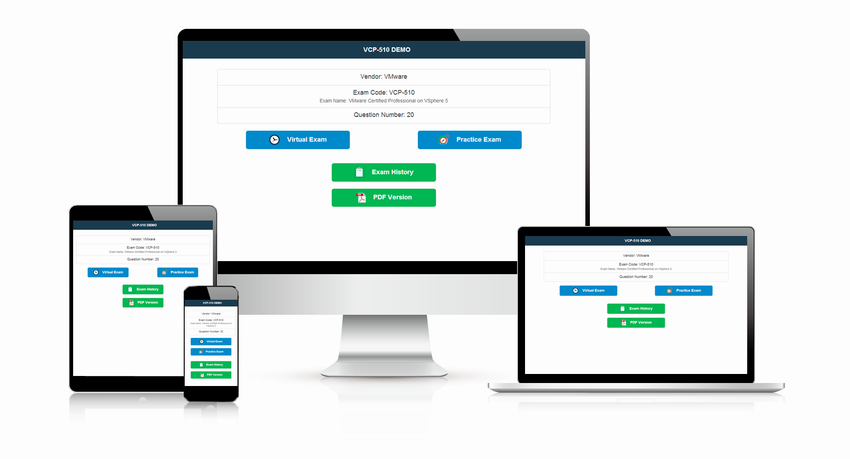
ExamCost offers free demo of each product. You can check out the interface, question quality and usability of our practice exams before you decide to buy.

Our Clients

amazon
centurylink
charter
comcast
bofa
timewarner
verizon
vodafone
xfinity
earthlink
marriot
vodafone