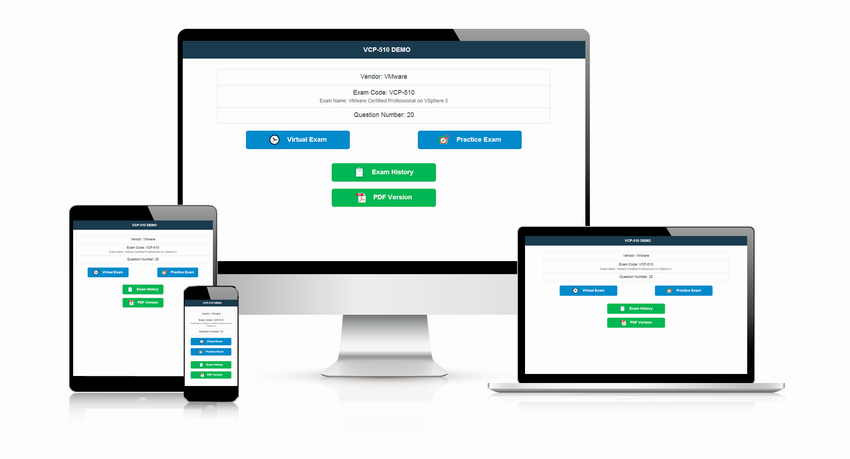
The old saying holds: a person of integrity can stand severe tests — and so can good study materials. That is why the Google Cloud - Apigee Certified API Engineer demo at ExamCost is free for everyone: download it, examine the Apigee-API-Engineer exam sample questions, open the software, and put the product through its trial by fire before you spend anything.
Google Apigee-API-Engineer Exam Syllabus Topics:
| Section | Weight | Objectives |
|---|---|---|
| Analytics, Monitoring and Troubleshooting | 15% | - Debugging and error handling
|
| API Design and Proxy Development | 25% | - API proxy configuration
|
| API Security | 25% | - Transport and message security
|
| Lifecycle Management, Deployment and Integration | 15% | - Deployment and environment promotion
|
| Traffic Management and Policies | 20% | - Rate limiting and quota management
|
Apigee-API-Engineer Exam Essentials: A Candidate's FAQ
Yes — true gold fears no fire, and our materials welcome the test. The free demo is cut directly from the real Google Cloud - Apigee Certified API Engineer question bank, so you get a genuine preview of the content, plus a look at what the software version looks like after opening and how it is used. All demos at ExamCost are free of charge; download, examine, and decide about the Apigee-API-Engineer exam package only when your questions are answered.
Registration is available through the official channels below:
Booking a realistic date — one that leaves room for several mock exam sessions — turns exam pressure into a structured countdown.
The Apigee-API-Engineer exam requires 70% to pass, and registration costs $200 USD. Since the fee applies to every attempt, candidates who rehearse thoroughly with mock exams before booking tend to make the smarter investment.
According to the official outline, the Apigee-API-Engineer exam covers weighted domains including:
- Analytics, Monitoring and Troubleshooting (15%)
- API Design and Proxy Development (25%)
- API Security (25%)
The Google Cloud - Apigee Certified API Engineer practice questions at ExamCost map onto these same objectives, so mock exam sessions in the software version exercise exactly the areas the real exam tests.
Google recommends the following training options:
Combine official courses with regular mock exams, and you cover both the knowledge side and the performance side of preparation.
The Apigee-API-Engineer exam is the official test behind the Google Cloud - Apigee Certified API Engineer certification from Google, and for many working professionals it ranks among the most essential exams of their career. It measures whether you can apply the published objectives in practical scenarios — which is precisely why rehearsing under realistic mock exam conditions, not just reading, makes such a difference to both confidence and results.
Recommended: 6+ months of hands-on experience with Apigee Edge or Apigee X; familiarity with API design, development, and management concepts
Practice tests mean a lot when an exam matters. The software version of the Google Cloud - Apigee Certified API Engineer materials provides mock exams that let you accumulate real experience: each session builds familiarity with question flow and timing, which relieves stress, and at the same time increases your answering speed and the standardization of your responses. By the day of the real Apigee-API-Engineer exam, you are not facing something new — you are repeating something practiced.
The Apigee-API-Engineer exam includes 55-60 questions and allows 120 minutes minutes. That is limited time per question — mock exams under the same cap are the most direct way to build the pace you will need.
Google Cloud - Apigee Certified API Engineer Sample Questions:
Your company runs their internal services across two datacenters in a hot-warm configuration The back-end system for a new API runs in both data centers You want to implement a proxy that handles failover between these data centers What should you do?
- A. Create two service callouts to the target, calling the hot datacenter first and the warm datacenter in the event of failure on the first call
- B. Use a Java Callout to the target, calling the hot datacenter first and the warm datacenter in case of failure
- C. Create Target Servers for each datacenter and configuring the TargetEndpoint with a LoadBalancer, setting the Is Fallback property on the warm datacenter
- D. Use the not datacenter as the TargetEndpoint and configure a FaultRule to call the warm datacenter in case of failure
Correct Answer: A 🗳️
You are working with the product owners and uncover an opportunity for new functionality. The product owners ask you to quickly outline the desired functionality. Which approach should you use?
- A. Use a behavior driven development "given-when-then" script to outline the main steps
- B. Implement a suite of unit test cases that qualify a working API
- C. Implement a proof of concept
- D. Use a business requirements document.
Correct Answer: D 🗳️
A customer has added response cache policy on all their search APIs, but traffic to the backend has not reduced much. They ask you to investigate, you find that GET queries are being cached and available in memory but cache misses are still high You want to improve caching and reduce cache misses What should you do?
- A. Review key fragments in cache key, ensuring only important parameters are used
- B. Increase the TimeToLive of cached objects
- C. Use lookup/populate cache policy.
- D. Review and increase the number of items on the cache resource to a higher number
Correct Answer: B 🗳️
The IT security staff is concerned about unexpected increases in traffic on an API with an OAuth authorization flow You want to limit impacts of such traffic increases. What should you do?
- A. Use the Concurrent Rate Limit policy, to ensure back-end services are not overwhelmed
- B. Use a Quota policy, to ensure that no client exceeds a defined quantity of traffic.
- C. Work with operations to ensure autoscaling is set up to respond to traffic events
- D. Use the Spike Arrest policy, to smooth out traffic spikes.
Correct Answer: C 🗳️
Which components of Edge used to configure HTTPS inbound communication?
- A. TLS Store
- B. Virtual Hosts
- C. Certificate Manager
- D. Keystores and Truststores
Correct Answer: D 🗳️
Viewing page 1 out of 26 pages.
Viewing questions 1-5 out of 128 questions.